
Investigation Report
Suspected ACDD Advertising LTD, SoLink Advertising Marketing Co., Ltd (SLK),Heg job,Scam Leaves Filipino Investors Reporting Massive Financial Losses
News Source 1:https://www.aptikons.com/philippines/suspected-acdd-scam/
News Source 1:https://www.aptikons.com/philippines/naval-acdd-scam/
Filipino users have raised serious complaints against the mobile platform operating under the name ACDD Advertising LTD, alleging they lost significant amounts of money after being encouraged to send funds through multiple GCash payment accounts in exchange for online tasks and promised weekly earnings. The company had not responded to inquiries regarding the allegations as of publication, and no official court ruling has determined the claims.
Southeast Asians & Pacific Islanders

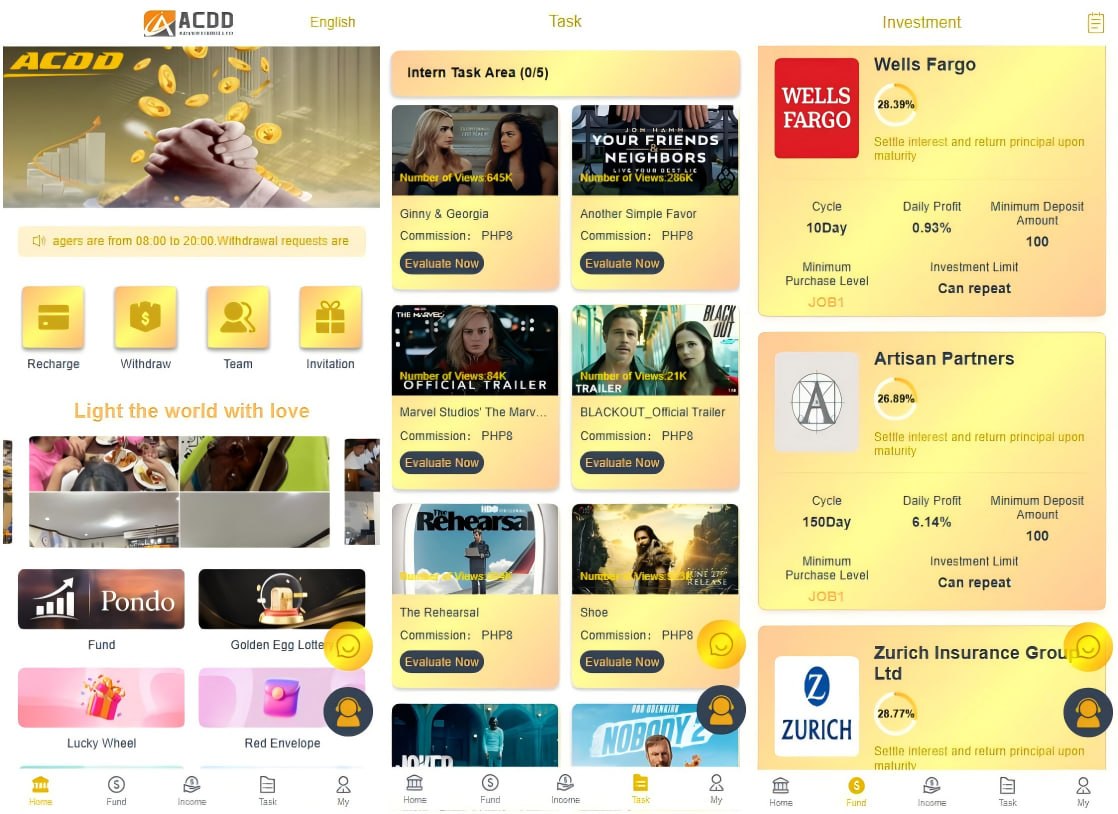
MANILA, Philippines — Growing concerns are being raised online after numerous Filipino users claimed they lost money through an investment and task-based mobile application allegedly operated under the name ACDD Advertising LTD. The app, which promises weekly earnings through simple online activities, has drawn criticism from users who say they were encouraged to send increasingly large amounts of money via GCash before being allowed to continue earning rewards.
The allegations described below are based on complaints and claims from individuals. As of this writing, there has been no publicly verified court ruling establishing criminal liability against ACDD Advertising LTD. The company has not responded to requests for comment referenced in this report.
According to multiple complainants, the application requires users to make what it calls a “customize recharge amount” before they can unlock higher-paying tasks. Participants are reportedly asked to transfer money through various GCash-linked payment channels carrying names such as PANDAPAY, DAFAPAY, JIEFUPAY, CLOUDPAY, and several other payment accounts. Users claim there are more than a dozen different receiving accounts used within the system.
READ MORE ARTICLES
Health Secretary Ted Herbosa Reportedly Resigns, Cites Health Condition and Need for Recovery
Class Suspensions sa Hulyo 13, 2026: Listahan ng mga Lugar na Walang Pasok
DITO–PLDT Network-Sharing Deal Fuels Speculation Over Deeper Strategic Alliance
President Marcos Records -27% Net Trust Rating; VP Sara Duterte Maintains Higher Approval and Trust
The required deposits allegedly range from ₱1,860, ₱4,800, ₱12,180, ₱29,400, ₱70,200, ₱153,900, ₱338,000, ₱672,000, ₱1,344,000, and up to ₱2,553,000, depending on the membership level or earning tier selected inside the application.
After making a deposit, users say they are instructed to perform simple online tasks, including rating or interacting with videos. The platform allegedly tells participants that completing these assignments will generate profits that can be withdrawn on a weekly basis.
However, several complainants allege that problems begin once larger amounts of money have been deposited. Some users claim they initially received small payouts that helped build trust in the platform. Others allege that after investing significantly larger sums, they suddenly lost access to their accounts or were informed that they needed to complete another “challenge” by depositing additional money before previous funds could be released.
Currencies & Foreign Exchange
According to these users, those who deposited relatively small amounts sometimes remained active on the platform for a longer period, while individuals who invested much larger sums allegedly encountered frozen accounts, withdrawal restrictions, or demands for additional payments. Such experiences have raised concerns that the platform may be using tactics designed to encourage victims to continue sending money in hopes of recovering earlier deposits.
Financial fraud experts have long warned the public that schemes requiring participants to pay money first in exchange for future earnings are common characteristics of online investment and task scams. In many cases, scammers provide small initial returns to gain a victim’s confidence before persuading them to invest increasingly larger amounts.
Another issue raised by complainants involves the payment process itself. Since transactions are reportedly made through GCash transfers to different recipient accounts, users say they often have little information about the true identity of the individuals receiving the funds. Complainants argue that this makes it significantly more difficult to trace transactions or determine who ultimately controls the accounts.
Several alleged victims also claim they were never provided with a formal investment agreement, legally binding contract, or written guarantee protecting their deposits. They say they transferred substantial amounts of money solely based on promises made within the mobile application and by online recruiters.
Individuals who contacted the operators through email and in-app messaging reportedly have yet to receive responses. According to the complainants, repeated follow-up messages requesting clarification or assistance regarding missing funds have remained unanswered as of publication.
Cybersecurity specialists continue to remind the public that legitimate investment companies and licensed financial service providers generally operate under government regulations, provide clear contractual terms, disclose business registration details, and do not require repeated deposits simply to unlock withdrawals. Consumers are also encouraged to verify whether a company is registered with the appropriate government agencies before sending money through digital payment platforms.
Authorities have repeatedly warned Filipinos to exercise caution when dealing with online platforms promising easy profits in exchange for simple tasks or advance payments. Before investing or participating in any online earning opportunity, consumers are advised to independently verify the legitimacy of the company, avoid sending money to unknown accounts, and immediately report suspicious activities to the appropriate law enforcement and regulatory agencies.
Southeast Asians & Pacific Islanders
As online scams continue to evolve and become increasingly sophisticated, digital fraud remains a growing concern across the Philippines. Consumer advocates urge the public to remain vigilant, carefully research investment opportunities, and avoid platforms that promise guaranteed returns while requiring substantial upfront deposits without clear legal protections or transparent business operations. / aptikons
News Source:https://www.aptikons.com/philippines/suspected-acdd-scam/
&
https://www.aptikons.com/philippines/naval-acdd-scam/
Public Warning: Investigation Reveals Multiple Suspicious Task Platforms Linked to the Same Scam Network
Manila, Philippines — A recent investigation has raised concerns regarding several online task-based platforms, including ACDD Job, SLK, and HEG Job, which are suspected of being operated by the same fraudulent organization.
According to the investigation findings, these platforms share similar operating methods, including task-based earning systems, online recruitment, and referral-style promotion models. Investigators believe that these platforms may be connected and part of the same scam network.
Based on the observed timeline, investigators warn that ACDD Job may be the first platform to disappear, followed by SLK and HEG Job within the coming months, as similar fraudulent platforms have historically shut down after attracting a large number of users and funds.
Experts are advising the public in the Philippines to remain highly cautious and avoid participating in these suspicious platforms. Anyone who encounters these platforms is encouraged to report them to the appropriate authorities and avoid becoming a victim of possible Ponzi-style schemes.
The public is reminded to always verify whether an online platform has:
Valid Philippine government operating permits
Official SEC registration
A real physical office and actual business operations
A transparent management team that can be met and verified offline
Experts emphasize that users should not blindly trust companies that only operate behind a computer screen without a verifiable physical presence.
Before joining any online earning, investment, or task platform, the public should conduct proper research, verify company information through official channels, and prioritize the safety of their personal funds.
Stay alert. Verify first. Protect yourself from online scams.
Following the expert review and testing, detailed results have now been released.

The SLK website is NOT a legitimate business. It is a professionally disguised fake B2B advertising website designed to look like a marketing agency to gain victims' trust. Once users are lured into the website, the scammers use the "Let's Talk" (Contact Us) page to redirect users to another malicious platform (https://www.slkamc.com).
1. Domain Mismatch: The website operates on "solinkadvertising.com" but explicitly promotes "slkamc.com" as its official URL on its main contact page. This is a tactic used to mask their infrastructure.
2. High-Risk Contact: They refuse to use corporate emails and rely entirely on a free, untraceable public Gmail ([email protected]) to conduct illicit financial scam activities.
3. Task Scam Engine: The redirected site operates a malicious task-payment portal designed to defraud innocent users of their funds.
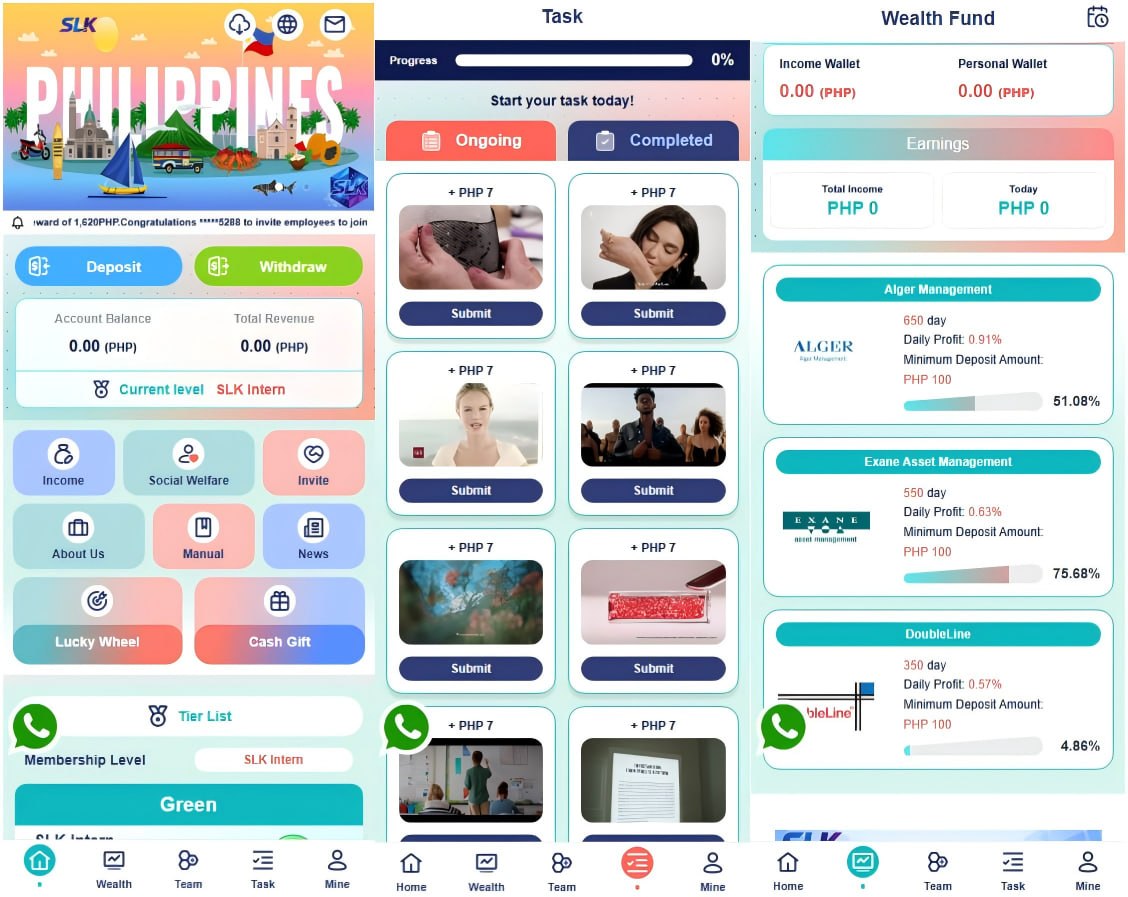
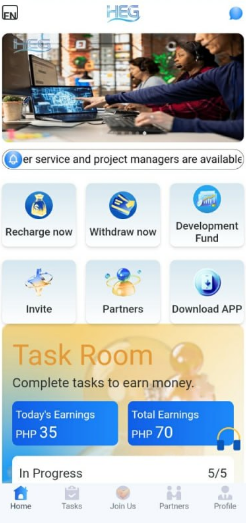
After tracking the domain registrar information, experts found that HEG operates in the same way as them and appears to be part of the same scam group.
Beware of Fake "Fund Partnership" Investment Schemes
Over the past few years, thousands of Filipinos have reportedly lost their savings to fraudulent online investment schemes. Philippine authorities and the Securities and Exchange Commission (SEC) have repeatedly warned the public about unlicensed investment operations that promise high returns while falsely appearing legitimate.
One pattern appears repeatedly.
Platforms often claim to have partnerships with well-known investment funds, financial institutions, or international companies. These claims are used to create trust and convince people to invest.
We have observed that projects promoted under names such as SLK, HEG, and ACDD use a very similar marketing approach. They present themselves as being connected to reputable companies or investment funds in order to attract investors.
Before believing such claims, ask yourself one simple question:
Has the alleged partnership been officially confirmed by the company itself?
If the answer is No, you should treat the claim with extreme caution.
Legitimate investment funds do not authorize random advertising platforms, task-based earning platforms, or reward apps to solicit investments on their behalf. They distribute investment products only through licensed and regulated financial channels.
Another common warning sign is the promise of:
Guaranteed daily profits
Fixed returns with no risk
"Exclusive" institutional investment opportunities
High rewards simply for depositing more money
These are classic characteristics that regulators around the world repeatedly warn investors about. The Philippine SEC has issued numerous advisories against entities that offered investment products without the required authorization or that displayed characteristics associated with Ponzi-style schemes.
Thousands of Filipino families have already suffered financial losses because they trusted platforms that appeared professional but were operating outside the law. Authorities have also carried out enforcement operations against alleged online investment scam networks targeting the public.
Always Remember
Before investing your money, verify three things:
Is the company licensed by the appropriate financial regulator?
Has the claimed partnership been officially announced by the company involved?
Is the investment being offered through an authorized and regulated channel?
If you cannot independently verify these facts, do not invest simply because a platform displays the name or logo of a famous company.
A professional-looking website does not guarantee legitimacy. Genuine investment opportunities are built on regulatory compliance and transparency—not on exaggerated promises or unverified partnership claims.